During my internship, I created Facebook posts to engage students and community members with sustainability practices. I researched topics such as reducing single-use plastics, conserving water, and composting, then translated that information into clear, actionable posts. The challenge was making complex environmental ideas understandable and engaging, so people could apply them in their daily lives. Through this process, I strengthened my communication skills, learning how tone, visuals, and wording affect audience response. This project also helped me develop planning and organization skills. Each post had to be well-researched, visually appealing, and timed for maximum interaction. I learned to use tools like Canva for graphics and to adjust content based on community feedback. Beyond technical skills, the experience reinforced my passion for environmental outreach, I realized that small, consistent actions can have a meaningful impact. Reflecting on this work, I see how these skills connect to my career goals in environmental science. Whether educating the public, presenting research, or coordinating projects, effective communication is essential. My Facebook posts serve as tangible evidence of my growth, demonstrating my ability to combine knowledge, creativity, and outreach to make a real-world impact.
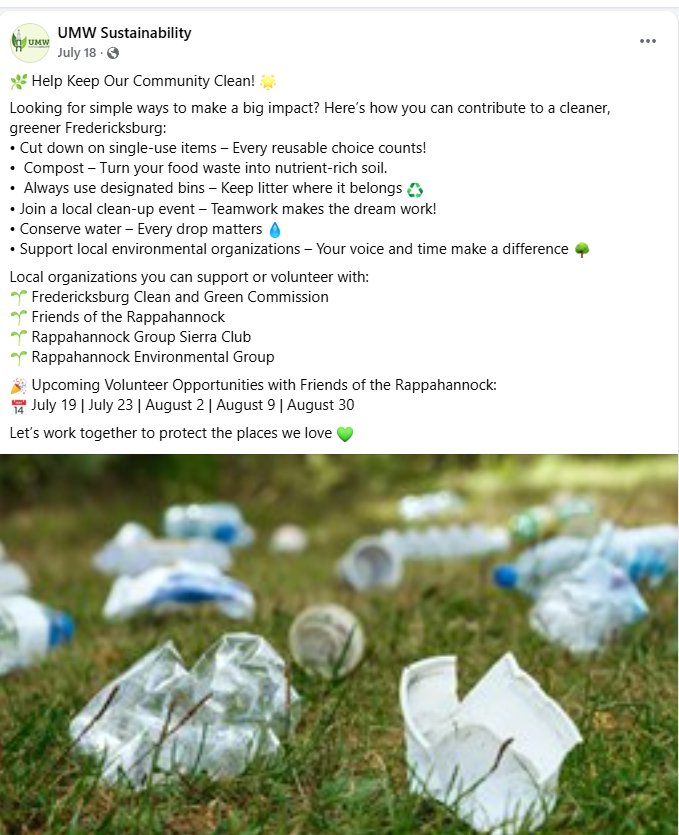
Educational post encouraging simple, actionable sustainability habits for the community.
As part of my internship, I created a “Green Move-In Guide” for incoming students to encourage sustainable practices on campus. The guide included tips on reducing waste, recycling properly, conserving energy, and making eco-friendly purchasing choices. My goal was to make sustainability approachable and actionable for students who were adjusting to campus life. This project strengthened my skills in research, writing, and design. I had to gather accurate information on campus sustainability resources, organize it clearly, and present it in a visually appealing format that would capture students’ attention. I used Canva to create graphics and structured the guide so that tips were easy to follow. Additionally, I considered the audience carefully, thinking about what advice would be practical for students living in dorms or small apartments. Through this project, I also enhanced my communication skills. I learned how to convey important environmental concepts in a concise, friendly, and engaging way. Sharing the guide with incoming students gave me insight into how small changes, when widely adopted, can make a meaningful impact on campus sustainability. Reflecting on this experience, I see how producing educational materials like the Green Move-In Guide connects to my broader career goals. Effective communication, thoughtful organization, and promoting sustainable behaviors are all skills I will continue to develop in my future work in environmental science.